Friday, 11 February 2011

Grey Partridge


Introduction:
The Grey Partridge, Perdix perdix, also famous as the English Partridge, Hungarian Partridge, or Hun, is a gamebird in the pheasant family Phasianidae of the order Galliformes, gallinaceous birds. The genus has been productively introduce to a lot of parts of the world for gunfire, counting vast areas of North America, where it is most commonly famous as Hungarian partridge, or just "Hun". Widespread and common all through its big variety, the Grey Partridge is evaluate as slightest fret on the IUCN Red List of Threatened genus. This partridge breed on farmland crossways most of Europe into western Asia, and has been introduce widely into North America. They are fairly common in a few areas of southern Canada and the northern United States.
The Grey Partridge is a stout bird, 28–32 cm lengthy, brown-backed, with grey flanks and trunk. The belly is white, habitually marked with a huge chestnut-brown horse-shoe mark in males, and also in many females. Hens rest up to twenty eggs in a earth nest. The nest is regularly in the fringe of a muesli field, most commonly Winter wheat. The merely major and steady variation amid the sexes is the so-called cross of Lorraine on the tertiary covert of females – these life form marked with two sloping bars, as different to the one in males. 

These are present behind just about 16 weeks of age when the birds have molted into mature plumage. Youthful Grey Partridges are generally yellow-brown and lack the individual face and under part markings. The song is a cruel kieerr-ik, and when troubled, like most of the game birds, it flies a small reserve on round wings, a lot work Rick Rick Rick as it rise. They are a seed-eating genus, but the youthful in exacting take insects as an necessary protein provide. During the first 10 days of life, the youthful can just assimilate insect. The parents lead their chicks to the limits of muesli fields, where they can rummage for insect. They are also a non-migratory earthly genus, and form flocks exterior the propagation time of year.

California Quail


Add caption

Add caption


Introduction:
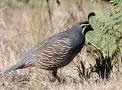
These birds have a curvature summit or plume, made of six feathers that droop onward: black in males and brown for females; the flank are brown with white streak. Males have a shady brown cap and a black face with a brown back, a grey-blue torso and a light brown abdomen. Females and young birds are mainly grey-brown with a fair-haired belly.
The California quail is a vastly friendly bird that regularly gathers in little flocks known as "coveys". One of their daily communal behavior is a dirt bath. A group of recoil will select an area where the earth has been recently curved or is supple, and using their underbellies, will warren descending into the dirt a few one to two inch. They then wiggle about in the indentation they have shaped, flap their wings and ruffle their feathers, cause sand to rise in the air. They appear to like superior vivid places in which to produce this earth pool. An ornithologist is able to sense the company of shy away in an area by spot the round indentation left after in the supple dust, a few 7–15 cm (3-6 inches) in diameter.
Their reproduction environment is shrubby areas and open woodland in western North America. The nest is a superficial scratch creased with plant life positioned on the earth below a plant or other coat. The female frequently lays just about twelve eggs. Once they are hatch, the youthful connect with both adults. Often, families cluster jointly, into multifamily "collective brood" which includes at slightest two females, numerous males and many progeny. Males connected with families are not always the hereditary fathers. In good existence, females will lay more than one grasp, send-off the hatch youthful with the linked male and laying a new hold, often with a dissimilar connected male.
They have a assortment of vocalizations counting the communal "chicago" call, make contact with "pips" and caveat "pips.